







Nestled beneath the Twin Peaks of Noe and Eureka is the Eureka Valley also known as The Castro, one of San Francisco's most vibrant and ever-changing historic neighborhoods. Originally the Eureka Valley was populated by the Ohlone people. These native people harvested mussels, clams, and abalone. Ohlone means people of the abalone. Supposedly, two of their trails between settlements intersected at the current intersection of Castro and Market streets. Their population was decimated by contact with settlers during the Spanish Colonial period. Don José de Jesús Noé, for whom Noe Peak and the Noe Valley neighborhood are named, was the last Mexican mayor of Yerba Buena (present day San Francisco). He had a ranch where the Noe Valley neighborhood is now. General José Castro was the Military Commandant of Mexico's Alta California (Upper California). His ranch occupied what is now the Castro neighborhood. He was pushed out when John C. Fremont and other invading Americans proclaimed that this part of Mexico should become part of the United States. Castro's former ranch became a cluster of small vegetable farms, cattle and sheep ranches, and dairy farms between 1850 and the 1880s. With the completion of the Market Street Cable Railway, people could hop on a streetcar and be whisked from the more rural Castro to downtown San Francisco six miles away. This development created a real estate boom because working-class people could build a two-story Victorian house for $1,000 and easily commute into the city. The Castro became known as "Little Scandinavia" due to the high concentration of Norwegian, Swedish, and Finnish immigrants. The devastating 1906 San Francisco Earthquake left The Castro largely undamaged.

General José Castro


With the passage of time, all of the gorgeous Victorian houses fell out of favor. Residents fled to the more modern suburbs. The Castro became rundown, but it was a cheap place to live. This attracted hordes of hippies in the 1970s. Gradually the neighborhood attracted more and more gay and lesbian homeowners who loved their Victorian homes. With increasing professional incomes, they invested heavily in restoring these unique wonderful houses. The Castro became a world-renowned mecca for the LGBTQ+ community. The neighborhood is still about 1/3 gay, but that is changing. Homes are now so attractive, and the shops are so wonderfully eclectic, it is causing people, regardless of sexual preference, to bid housing prices sky-high.


The historic Castro Theater, built in 1922, is a mashup of architectural styles and the cultural center of the Castro.


The historic streetcar line is just around the corner from the theater. It is part of the city's charm. Next time you go to San Francisco, hop on the F Market & Wharves historic streetcar, which terminates at the Castro, and walk this fabulous neighborhood.

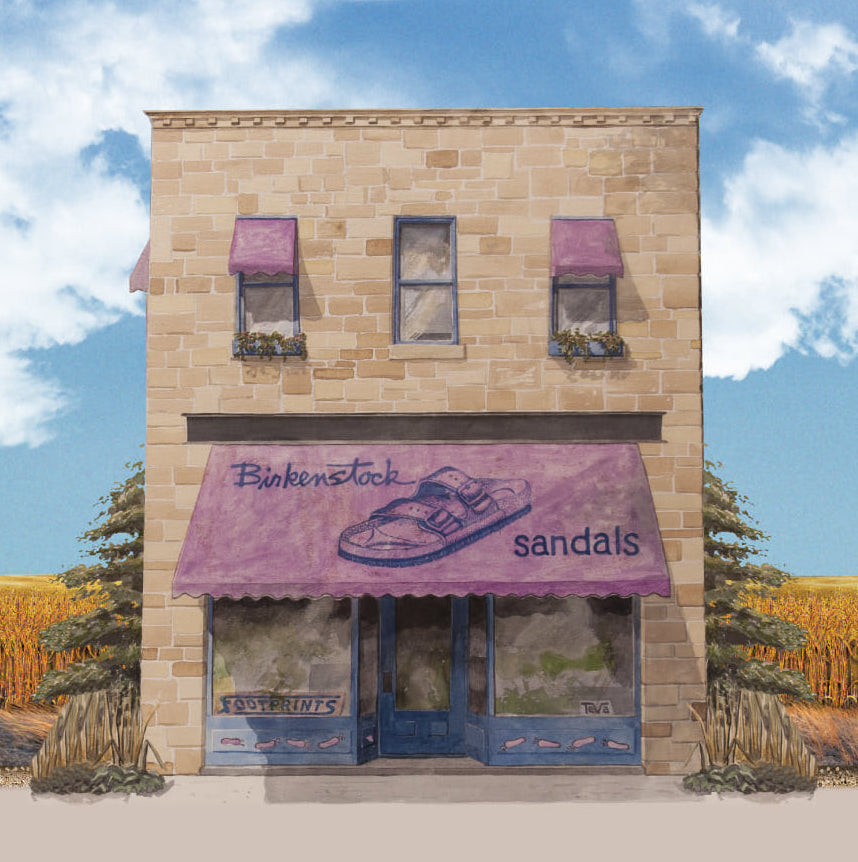
Take a walk with Birkenstock.