















In 1896, the Supreme Court ruled in Plessy v. Ferguson that state-mandated racial segregation did not violate the 14th Amendment's Equal Protection Clause. That decision established the legal doctrine of "separate but equal" which formed the basis of Jim Crow laws. In 1954, the Supreme Court reversed itself and ruled in Brown v. Board of Education that separate is inherently unequal. At the center of that case was Monroe Elementary School in east Topeka, KS. Monroe Elementary was a segregated school for Black children. Linda Brown, a young Black girl, was forced to attend Monroe even though a White school was much closer to her home. This is why Linda's name is attached to the case of Brown v. Board of Education.


The Monroe School eventually closed in 1975 due to declining enrollment. Ownership changed hands a few times. Following grassroots efforts to save the building, in 1992-1993 the National Park Service established the Brown v. Board of Education National Historical Park. The historic site's mission is to tell the ongoing story of racial injustice in the United States. Walking through the halls of Monroe Elementary, it looked much like my elementary school in Wichita in terms of the brickwork, the terrazzo floor, and window treatments. My school remained segregated for more than a decade after Brown v. Board of Education. Change comes slowly.


Built into the fabric of the United States is a belief in a moral order that, although there are starts and stops, we gradually work toward a more just society. About 20,000 people visit Monroe Elementary every year to understand our history, our progress, and feel inspired to pursue the never-ending goal of achieving "Equality in the air we breathe."

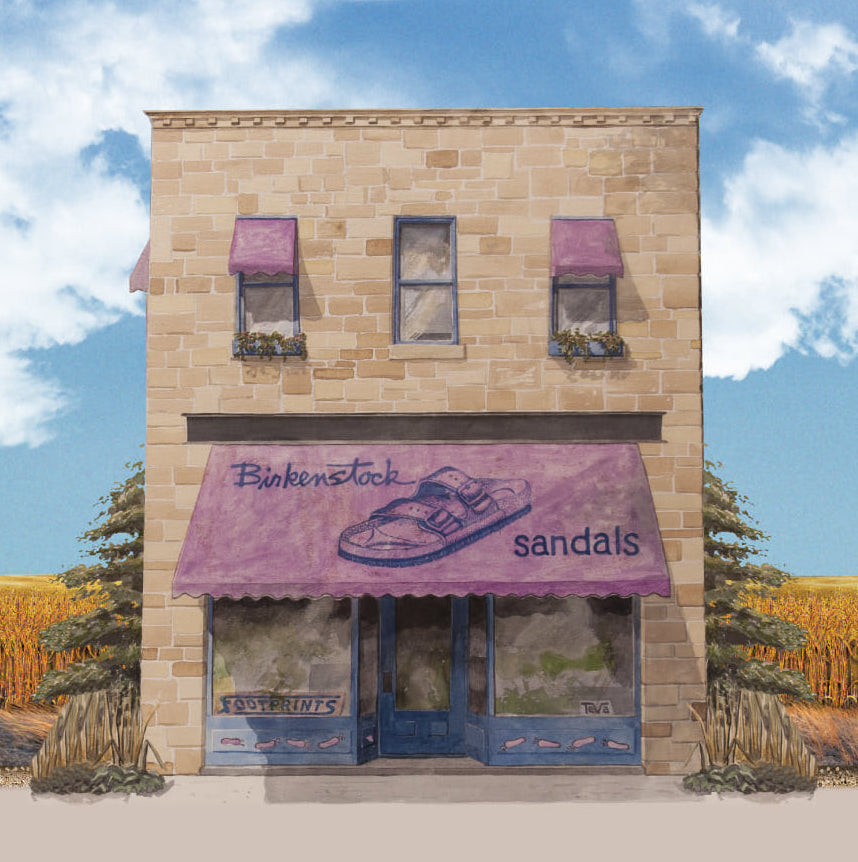
Take a walk with Birkenstock.